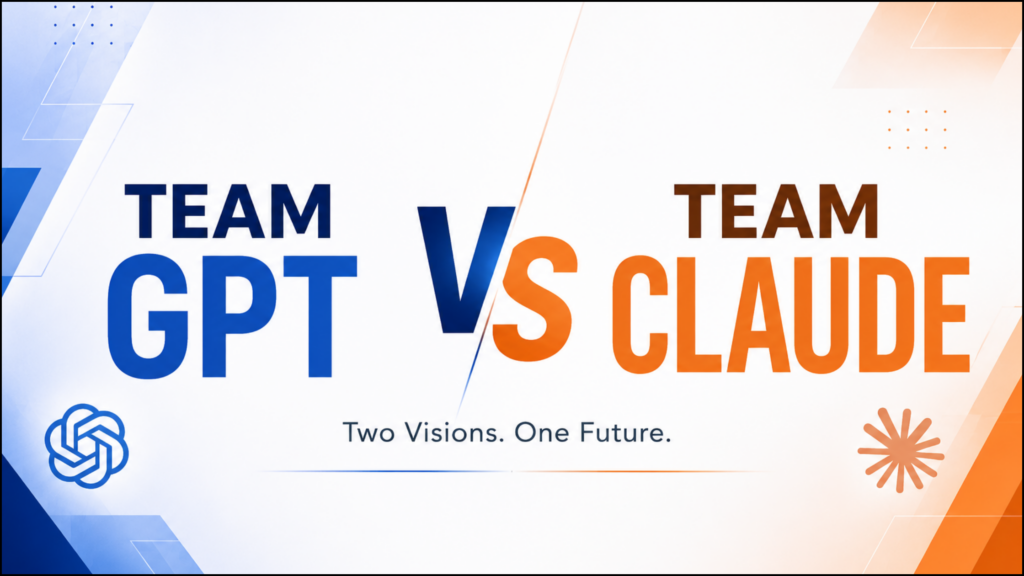
In 2021, two siblings made a decision that changed the AI landscape and created one of the greatest rivalries of our generation.
Dario and Daniela Amodei left OpenAI in their roles as VP of Research and VP of Operations to start their own company. With them they took 15 of OpenAI’s key researchers, and Anthropic was born.
5 years later, in June 2026, Anthropic closed a massive Series H funding round with a $965 billion valuation, officially dethroning OpenAI as the world’s most valuable private AI company. To put that in perspective, in March, OpenAI sat at an $852 billion valuation.
Now, they’re making a play on Wall Street. Anthropic officially filed for a confidential IPO, and OpenAI rushed to file their own paperwork just days later.
Before there was GPT vs Claude, there was Altman vs Amodei
Behind the rivalry of the logos lies a deeply personal feud between the two founders: Sam Altman and Dario Amodei.
OpenAI was established in 2015 as a non-profit organization with a goal to “advance digital intelligence in the way that is most likely to benefit humanity as a whole, unconstrained by a need to generate financial return.” Four years later in 2019, they accepted a $1 billion investment from Microsoft.
They began transitioning to a “capped-profit” modelsparking conflict between internal researchers that wanted to prioritize safety and those that wanted to prioritize commercialization.
OpenAI CEO Sam Altman wanted to scale and deploy as quickly as possible to achieve Artificial General Intelligence (AGI)—a hypothetical AI capable of matching or exceeding human intellect across any task. At its core, AGI would be able to learn on its own and have common sense, creativity, and emotional understanding.
Dario Amodei, wary of the potential dangers of AGI, wanted to focus first on interpretability and transparency before launching.
Altman wanted to move fast, but Amodei wanted to move safe.
So Amodei left and started Anthropic as a Public Benefit Corporation, which requires directors to balance profit-making with public benefits and achieving their social mission. Essentially, Anthropic was established to prove to OpenAI that they could be profitable while sticking to their ethics and values.
What would win? Commercialization or safety?
In 2019 founders were split, in 2021, the companies were split, and now, fast-forward to 2026 and the public is split.
Two Different Personalities
OpenAI takes a product-first approach.
They use a technique called Reinforcement Learning from Human Feedback (RHLF). Humans rate the AI’s responses and the AI gets better at understanding preferences. The result is a conversational and charming assistant. But, it also has a higher risk of sycophancy.
Anthropic takes a safety-first approach.
They pioneered a method called Constitutional AI (CAI), where the AI is forced to adhere to a specific set of written principles (a constitution) rather than relying solely on human feedback in an effort to keep it helpful, honest, and harmless. This explains why at times Claude may feel a little more preachy and is more likely to refuse prompts. This also means that it is less likely to be peer-pressured by the user into generating harmful outputs. It would rather stay silent than risk breaking the constitution.
You can see these differences play out most clearly in how each company markets itself.
OpenAI presents itself as the platform of the future. Their advertisements make the technology feel futuristic and like a life hack. They highlight the versatility of their multi-modal features, so ChatGPT turns into a personal assistant that has eyes, ears, and a mouth.
Anthropic’s advertisements show Claude as a co-collaborator, with their tag line: Keep thinking. Instead of doing the work for you, they want Claude to work with you. It really embodies Anthropic’s belief that AI is a tool to be used by the human itself, not to replace the human.
The Cultural Moment
In early 2026, the tide started turning toward Anthropic. Their release of Claude Opus 4.6 introduced native agentic planning — the ability to look at a complex codebase, map out a multi-day refactoring plan, and execute it step-by-step with almost no supervision. While ChatGPT was still mostly a chat-and-response machine, Claude was starting to act like a real collaborator.
Another factor in the shift: In February, Anthropic walked away from a $200 million Department of War contract, refusing to strip safety guardrails that blocked Claude from being weaponized for autonomous warfare and mass domestic surveillance.
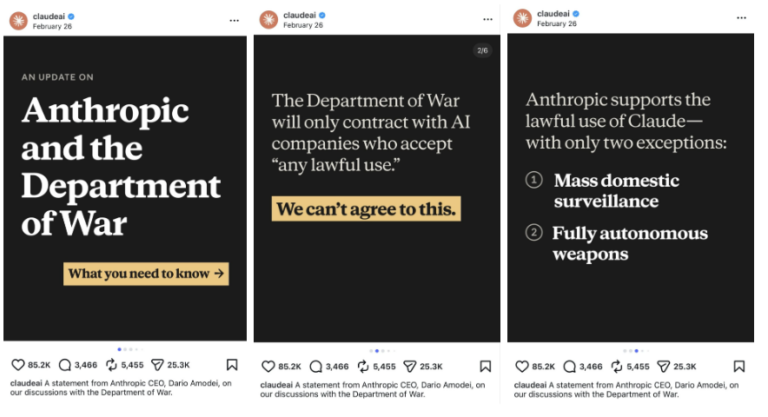
OpenAI immediately swooped in hours later to claim the classified military deal under a more permissive “all lawful purposes” framework, sparking fierce backlash and a wave of cancellations from privacy-conscious developers.
This was the first major consumer “ethical revolt” of the AI era.
While OpenAI secured massive defense revenue, Anthropic’s willingness to sacrifice millions to defend its morals ultimately built an unbreakable enterprise moat, winning deep loyalty from founders who wanted an AI partner that wouldn’t compromise their data or ethics for a government payout.
Within 48 hours of OpenAI announcing the deal, over 1.5 million users cancelled their ChatGPT Plus subscriptions almost immediately. This sudden exodus wiped out an estimated $360 in projected annual recurring revenue overnight.
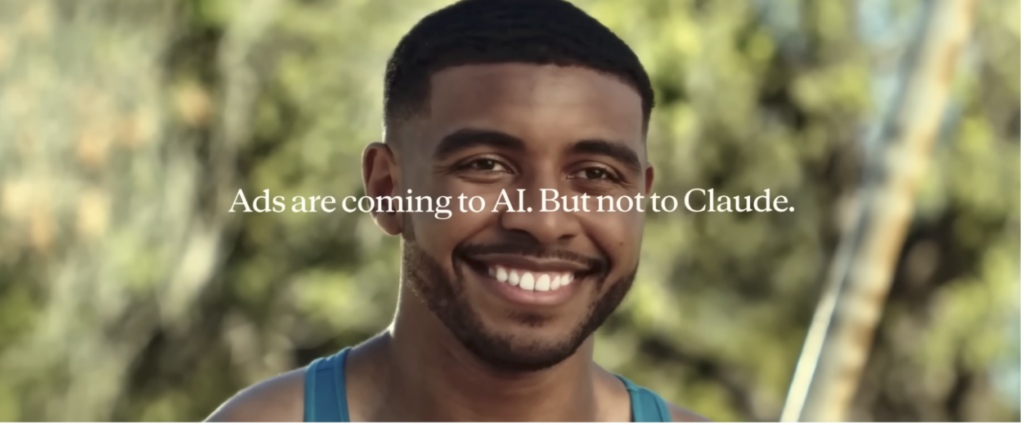
Of course, Anthropic’s ads during the Super Bowl LX helped sell their brand more too. They took a direct shot at OpenAI, making fun of ChatGPT’s tendency to agree with everything the user says and, most importantly, their decision to start including ads inside the product itself. Anthropic positioned themselves as the professional choice––clean, ad-free, and focused on work rather than selling you dating site memberships in the middle of a debugging session.
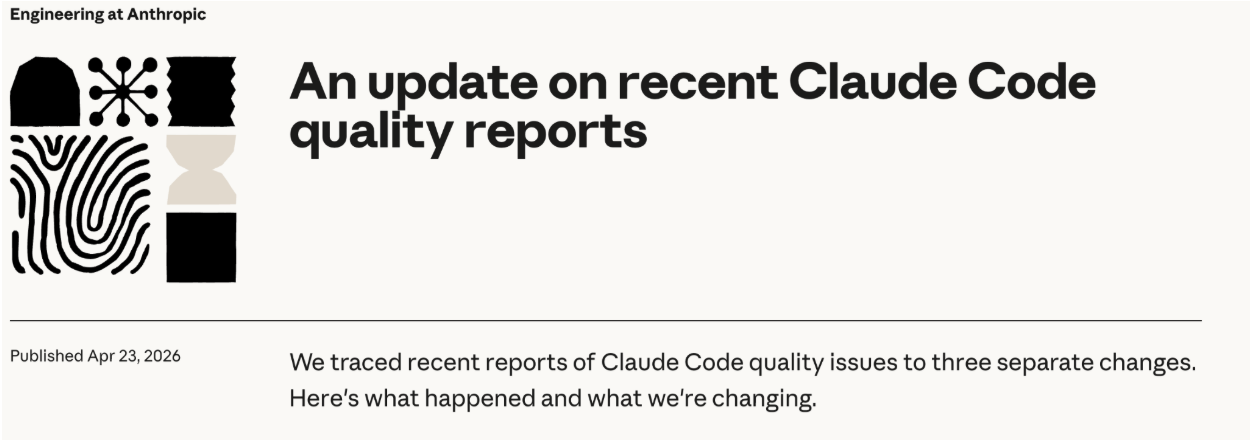
Even so, just as soon as they rose, they began to fall. From March through April, developers started to feel like something was off with Claude. Anthropic had quietly changed the default reasoning effort for Claude Code from high to medium to reduce latency and save on compute costs, but the result was a noticeable drop in coding quality. Developers who were used to Claude solving complex architectural problems suddenly found the model giving lazy answers or skipping difficult refactors. Anthropic eventually admitted that this change, combined with a bug in how thinking blocks were managed, caused the model to lose its train of thought in long sessions.
The Final Battle of the Chatbots
Every chatbot gave us a diplomatic response. They all agreed on the same conclusion: choose based on your product needs, not the brand.
The Real Lesson
One of the biggest mistakes a founder can make is declaring full loyalty to any single AI company instead of prioritizing actual needs, because with the fast-changing nature of this industry, things can shift at any moment.
The most important takeaway from these past few months is to never hard-code yourself into a single provider. New releases will always be coming. The smartest way to build is the one that keeps you model-agnostic.
Want to go deeper on the technical differences like pricing, APIs, context windows, and how to actually choose between them for your product?